
Case study / Game Design · Systems · Interactive
Famers Duel — Digital Tennis Card Game
Game Design · Systems · Gamification
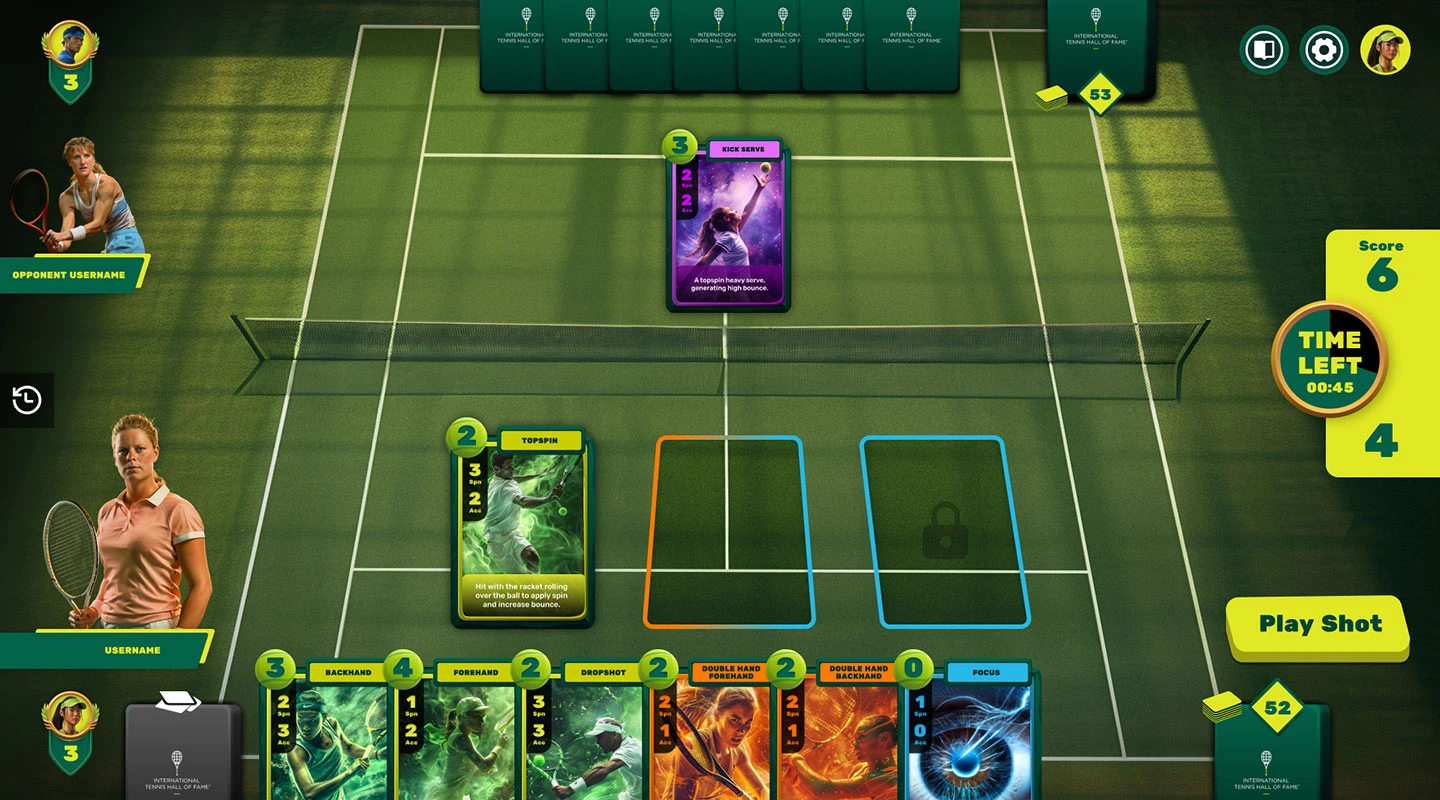
Final product shown for context. My contribution focused on game design, systems and mechanics.
Project overview
Famers Duel translates the characteristics of tennis legends into a turn-based digital card game.
Working through Charles Elena, I designed the card and deck mechanics, player decisions and counterplay, legend-specific playstyles, and progression concepts. This case study distinguishes the documented design from features publicly confirmed in the release.
01 / Design documentation
Turning Tennis into a Turn-Based Strategy Game
The central design problem was translating the rhythm of a tennis rally into cards while keeping the logic of the sport. I built the exchange around serving, reading the opponent’s return and building enough pressure to force a failed return.
Each card represents a tennis action or a way to change that action. The rally has a recognizable beginning, a back-and-forth exchange and a clear reason for ending.
- Serve
- Rally
- Return
- Counterplay
- Failed return
- Point
- Game / set
Returns and counters repeat until the exchange resolves.
02 / Design documentation
Core Game Loop
The design gives each player a starting hand and separates the serve deck from the main deck. A serve starts the exchange. Players draw and play on their turns, alternating returns until one side cannot make a successful response.
A return is a choice about the current shot and the cards worth spending on it. A successful response sends the decision back to the opponent. A failed exchange resolves the point, feeding into the tennis-style game and set structure.
- Serve
- Shot
- Opponent response
- Modify / counter
- Return or fail
- Point
On a successful return, play loops back to the opponent’s response. Resolve the point only when the rally ends.
03 / Design documentation
Power, Accuracy & Spin
Three attributes gave shots different jobs. Power applied pressure, Accuracy made that pressure more or less reliable, and Spin controlled how much the opponent could do in response.
In the design, a smash could offer high Power at the cost of reliability. A lower-power drop shot could apply pressure through Spin. Manoeuvres let players change those trade-offs to fit the exchange.
- Power / Pressure
- Sets the strength the opponent needs to match or exceed to return the shot.
- Accuracy / Risk
- Changes the chance of the ball going out. The draft used different failure probabilities for different Accuracy values.
- Spin / Control
- Limits how many cards the opponent can use in response, reducing room for modifiers.
04 / Design documentation
The Card System
The main deck combined return actions, modifiers and situational shots. The separate serve deck made the opening decision different from the decisions made during the rally.
- Shots
- Forehand, volley and lob give the player different ways to return the ball.
- Manoeuvres
- Trade Accuracy for Power, add Spin, or draw and discard to improve the hand.
- Special shots
- A down-the-line forehand or cross-court shot adds a situational combination to a compatible action.
- Serve deck
- A flat serve and a kick serve start the exchange with different attribute profiles. A power serve was explored as a limited-use option.
05 / Design exploration
Designing Different Playstyles
The legends were designed to change how a player used the same rules. Bonuses, unique cards and preferred shots gave each deck a reason to play differently without requiring a separate ruleset.
These four examples come from premade-deck design drafts. They describe the explored playstyles, not the released roster or final abilities.
| Legend | Strength | Mechanical effect | Strategic behaviour |
|---|---|---|---|
| Kim Clijsters | Forehand | More Power on forehands. | Build exchanges around forehand pressure. |
| Tracy Austin | Backhand | More Power on backhands and a dedicated combination. | Keep backhand options for planned follow-ups. |
| Stan Smith | Volley | More Accuracy and Spin on volleys. | Use reliable volleys to constrain responses. |
| Pam Shriver | Serve | More Accuracy and Spin on serves. | Set the terms of the rally from the opening shot. |
06 / Design documentation
Risk, Reward & Counterplay
The opponent’s last shot sets the problem: its Power establishes the return threshold and its Spin can limit the response cards available. The right card changes with the shot, the hand and the resources the player wants to keep.
One draft modifier adds two Power and costs one Accuracy. Another exchanges Spin for a more reliable shot. Drawing and discarding changes the hand rather than the current shot. The trade-offs give players a reason to consider the next exchange before spending a strong card.
- Meet the threshold
- Spend a modifier to make the return, accepting the associated risk.
- Constrain the reply
- Trade some reliability for Spin when limiting the next response is valuable.
- Keep options open
- Manage the hand so there are useful responses left when the rally changes.
07 / Design exploration
Designing Beyond the Match
I designed a longer loop around match play: players could earn XP or rewards, unlock cards, and use them to evolve a premade deck. The deck drafts explored replacing related cards with earned legend cards while preserving deck size.
A 32-level XP progression was explored during design. The files also propose daily login rewards, quests, challenges, events and tournaments as different routes to unlocks. These were engagement concepts; the exact XP curve and reward schedule are not confirmed in the release.
- Play
- Earn XP / rewards
- Unlock cards
- Customize deck
- Try new strategies
- Play again
08 / Design documentation
Design Iteration
The surviving files document several iterations of the rules, card values, legend abilities, premade decks and progression. One exploration used equipment and movement on the court; another centered the rally on shot attributes and cards that modify the reply.
Changing how a return worked changed the value of modifiers and signature cards, which in turn affected deck composition and what an unlock could add.
- Core rules
- Card values
- Legend abilities
- Premade decks
- Progression
These areas informed one another across revisions; this is not a release timeline.
09 / Released game
Final Implementation
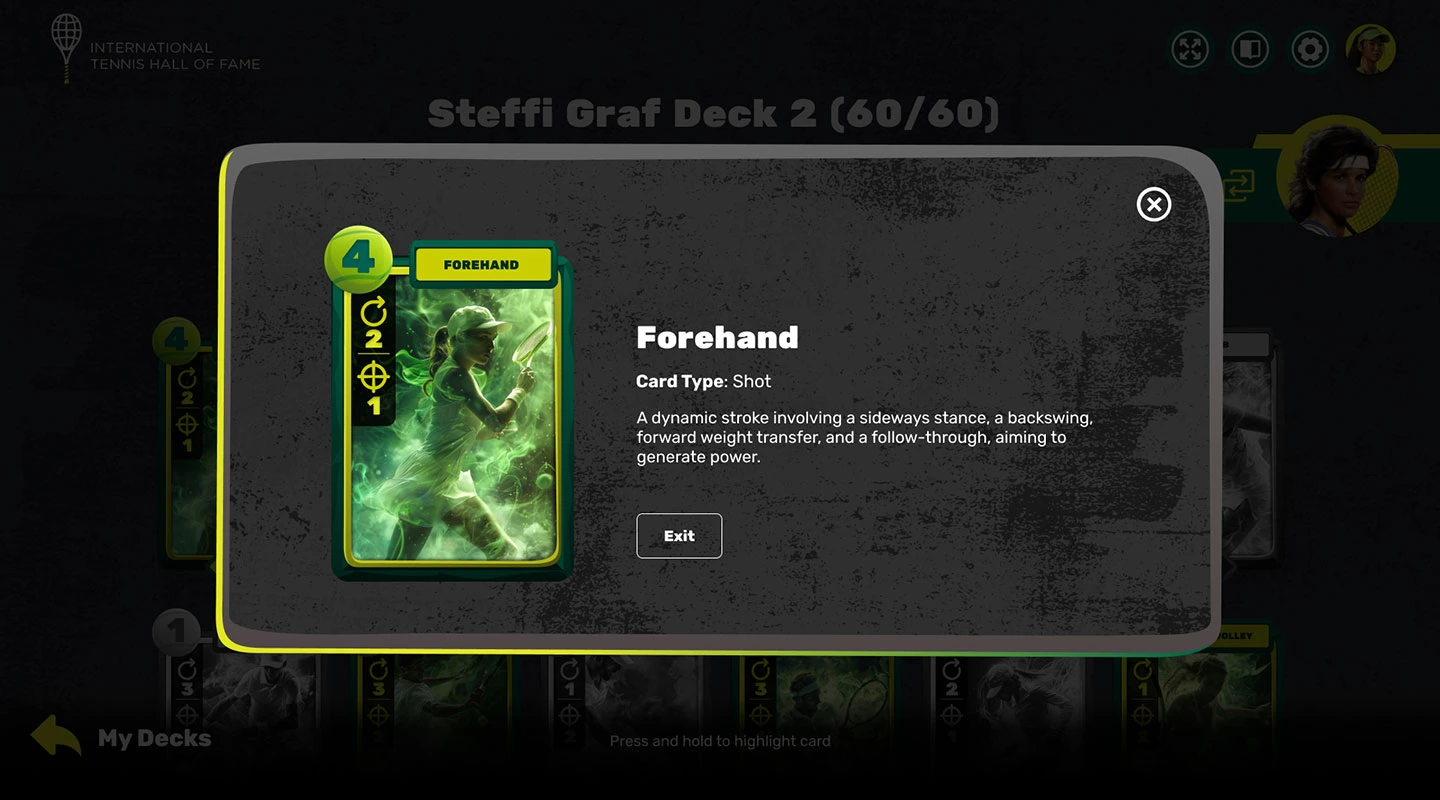
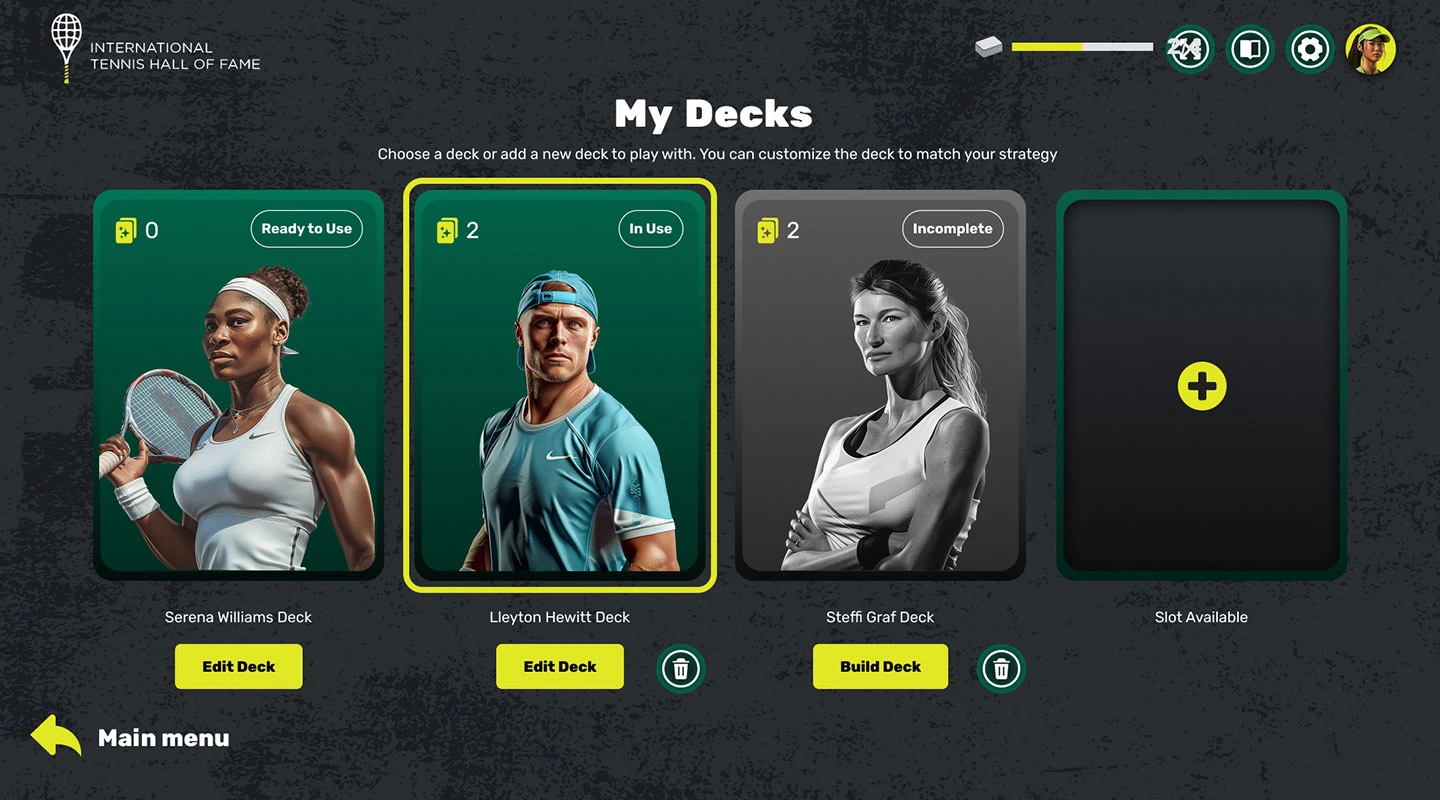
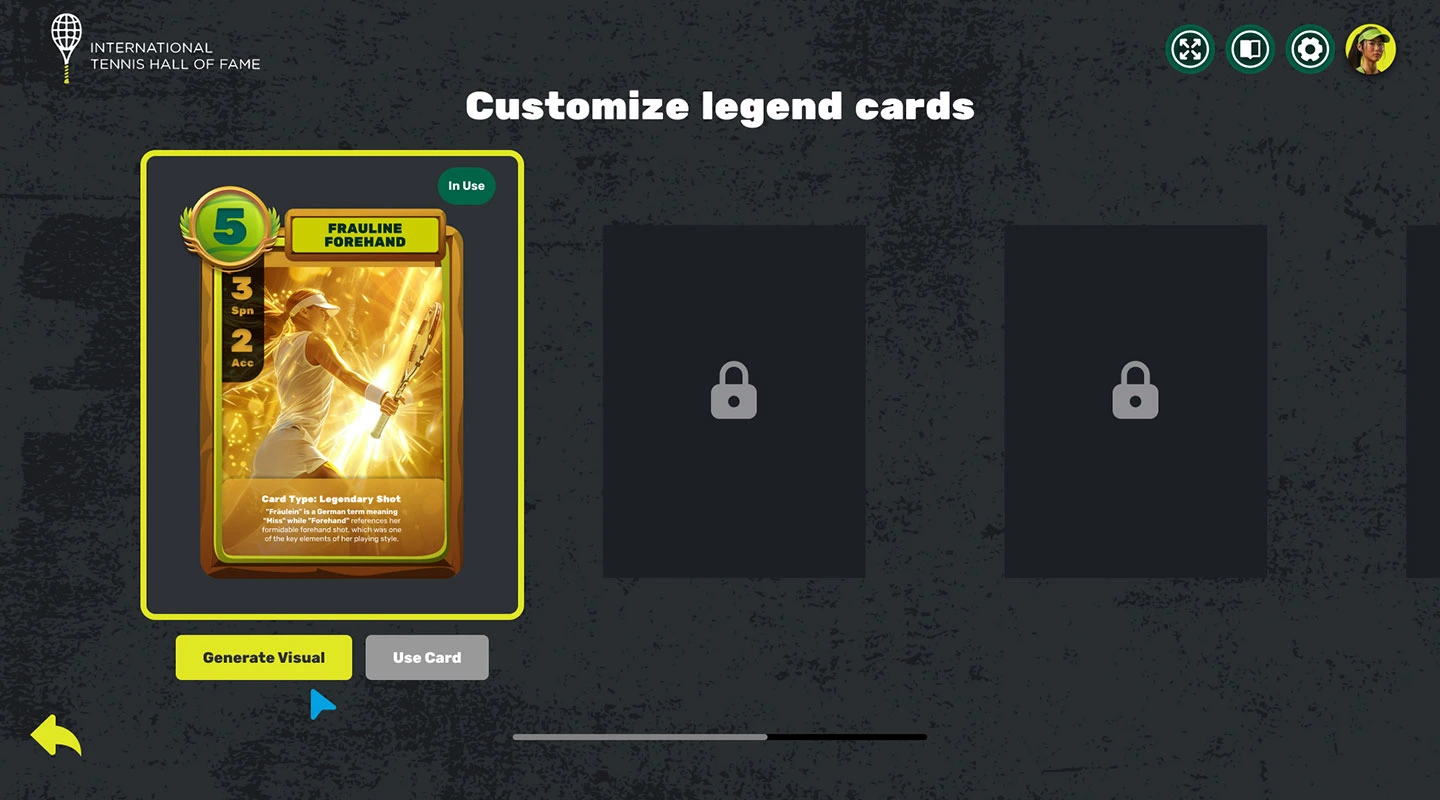
The released browser game retained turn-based tennis, shot selection, power-ups, tennis-style scoring and signature shots based on the legends’ playing strengths. The official launch describes matches against friends, other fans or a bot. Charles Elena also describes card leveling and artwork customization.
The public material confirms these features at a high level. It does not establish the draft’s exact thresholds, hand sizes, legend bonuses or 32-level XP curve. The official screenshots below show the final product for context; my contribution was game design, systems and mechanics.
10 / Contribution
What This Project Demonstrates
- Game Design
- Translate the rhythm of a real sport into a playable card game.
- Systems Design
- Connect card attributes, deck composition and response options.
- Balancing
- Create trade-offs between Power, Accuracy and Spin.
- Player Differentiation
- Build legend playstyles around strengths and signature abilities.
- Gamification
- Design progression, rewards and unlocks that give players new strategies to try.
- Iteration
- Refine the rules, card set and progression through multiple design versions.