
Case study / 3D · Character Animation · Real-Time · Interactive
Nadal VR Tennis — Character Animation Adaptation
Rigging, retargeting and character animation for an existing VR tennis experience
Project overview
This project involved adapting an existing VR tennis experience for a new Rafael Nadal version. Working through Charles Elena for Infosys, I adapted the character rig, retargeted useful existing motion, created new animation and resolved skinning issues before integrating the updated character back into the Unity production.
The existing game set the constraints. The new character needed to work with motion worth keeping and make room for new takes where the updated experience required them.
Adapting Rather Than Starting Over
The production already had a tennis-character pipeline and an animation library. I used that foundation to preserve motion that still worked for the updated character and identify where the new version needed different movement.
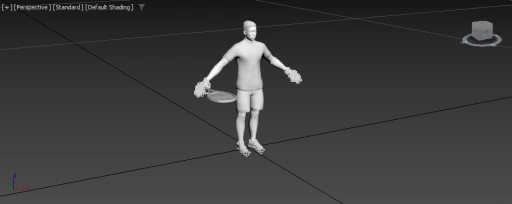
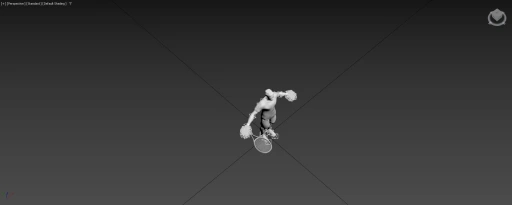
The two surviving rig tests preserve different poses and reference legacy assets, including a racket texture path from an earlier character folder. The complete previous shipped character is unavailable for comparison.
A Rig Built for Reuse and Adaptation
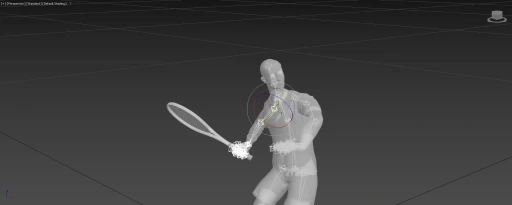
I rebuilt and adapted the skeleton in 3ds Max CAT, setting up IK controls and fitting the rig to the updated character. That gave me a way to adjust limb placement, support the stance and check the racket grip while refining transferred motion.
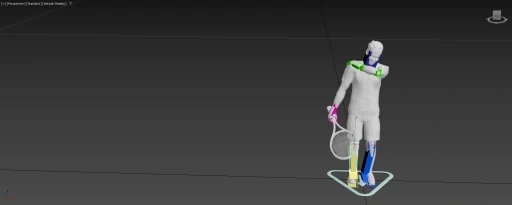
The saved idle test shows the CAT controls on the character. The exported animation files preserve a separate 63-bone hierarchy rooted at the hips, with finger chains and a dedicated racket bone.
Retargeting Existing Motion
I mapped existing motion to the updated rig, adjusted poses where proportions or grip changed, and authored new motion where the experience needed it. The production combined reused or retargeted motion with newly authored work. The origin of each surviving take remains unverified.
The archive preserves AutoCAT tools, mapping tables and a consistent exported skeleton across all four FBXs. Those files document the transfer infrastructure and the common delivery structure.
- Existing Animation
- Skeleton / Mapping
- CAT Rig
- Adjustment / New Animation
- FBX Delivery
Character Animation
Four animation sets survive as matching Max scenes and FBX exports. These muted previews play the archived FBX motion in a neutral viewport. The original character materials and game camera belong to the deployed footage above.
Low Backhand
High Forehand
Ritual / Character Behaviour
Character animation
Service
The longer take preserves the preparation, overhead action and recovery in one continuous preview.
Service Sequence
Racket & Body Interaction
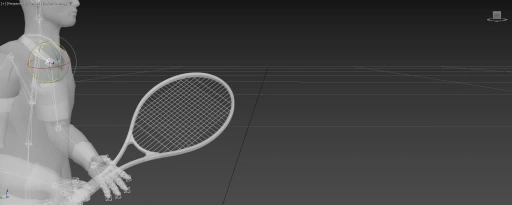
I worked on the body mechanics and the hand-to-racket relationship together. The grip needs to hold through the swing arc, the pose needs to read toward the incoming ball, and the recovery needs to lead back to a usable stance at gameplay pace.
The export preserves both a racket mesh and its bone. The saved backhand close-up shows why checking the wrist, fingers and racket together matters when transferring motion to a different rig.
Skinning & Character Adaptation
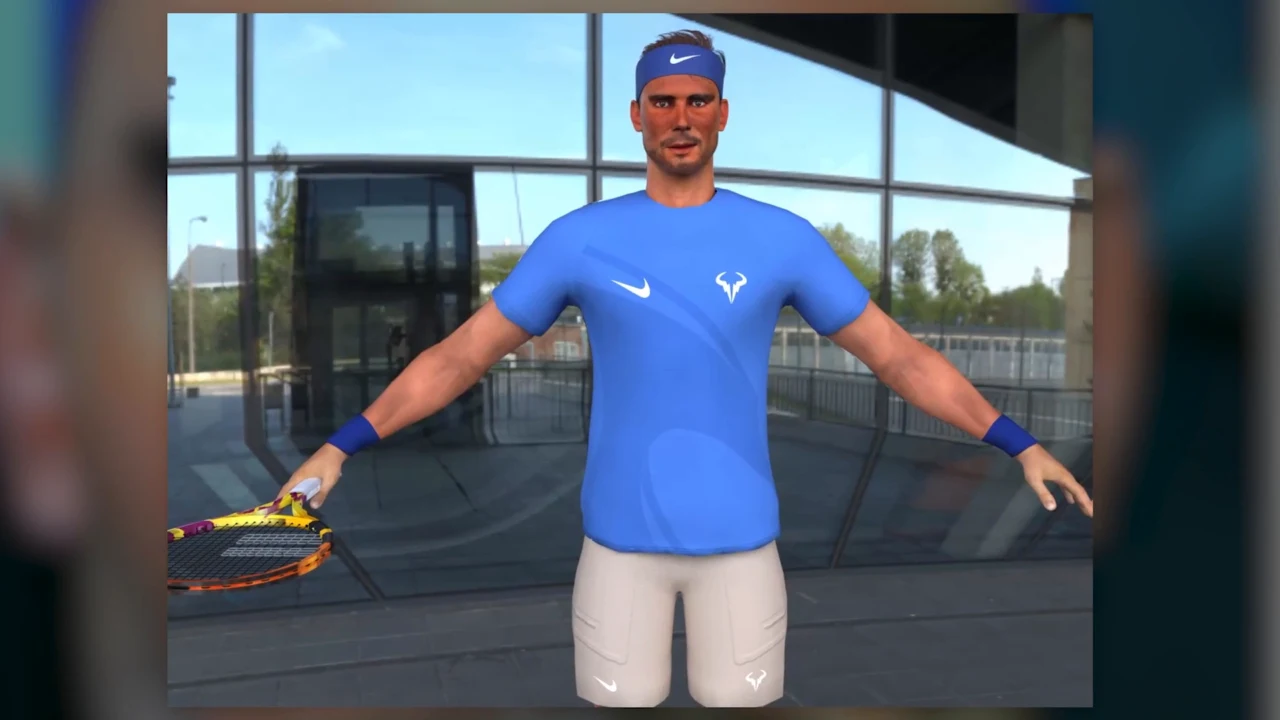
I fitted the updated character and uniform to the rig and repaired skinning where the mesh deformed poorly in motion. The archived Character1 mesh carries 62 vertex groups, and the source folder retains skin-weight transfer tooling. The surviving files do not provide a before-and-after comparison of the repairs.
Returning the Character to Unity
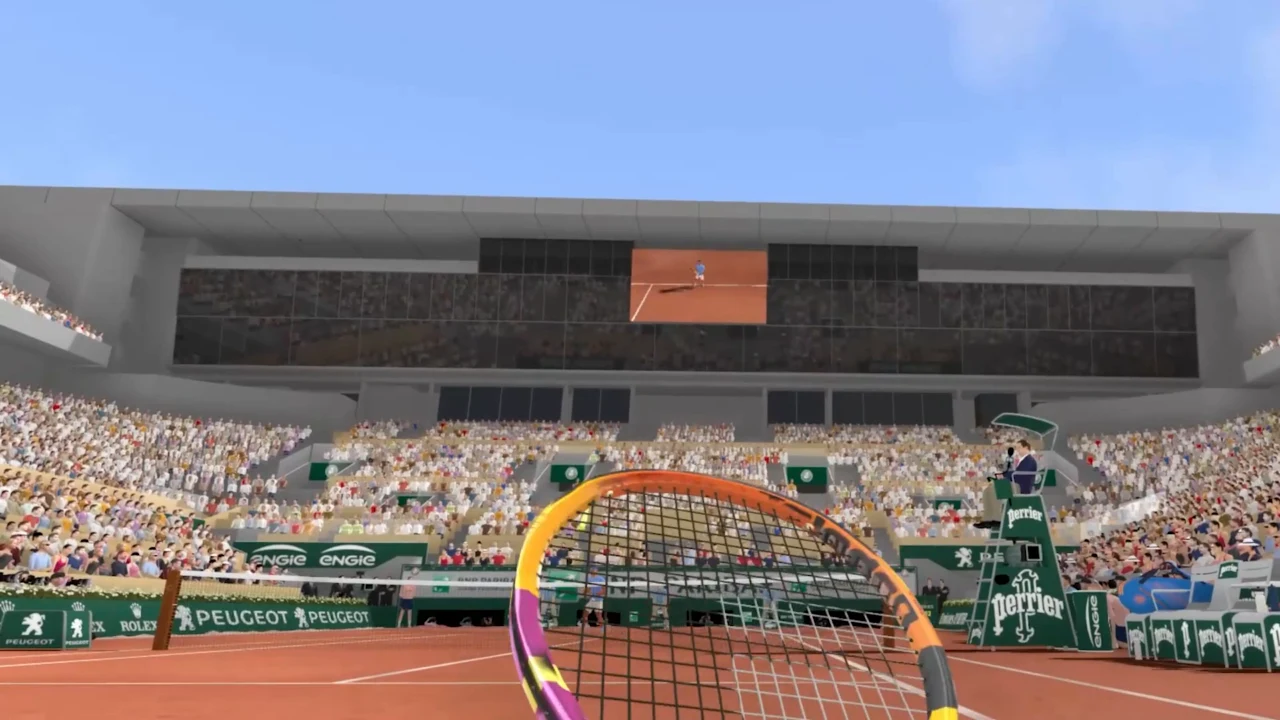
I exported the updated character and animation as FBX, replaced the character in the Unity production and reconnected or repaired animation references after the replacement. That handoff brought the revised rig and motion back into the existing experience.
The source archive preserves the animated FBXs and legacy Unity-related asset paths. The Roland-Garros-branded success-story footage shows the character in the experience. The Unity project and its animation references are absent from the surviving archive.