
Case study / Unreal Engine · 3D Environment · Real-Time · Motion / VFX · Display Content · Large-Format Display
Infosys Foundation USA — Impact Gala 2025
A two-hour Unreal Engine landscape created for an ultra-wide live-event stage
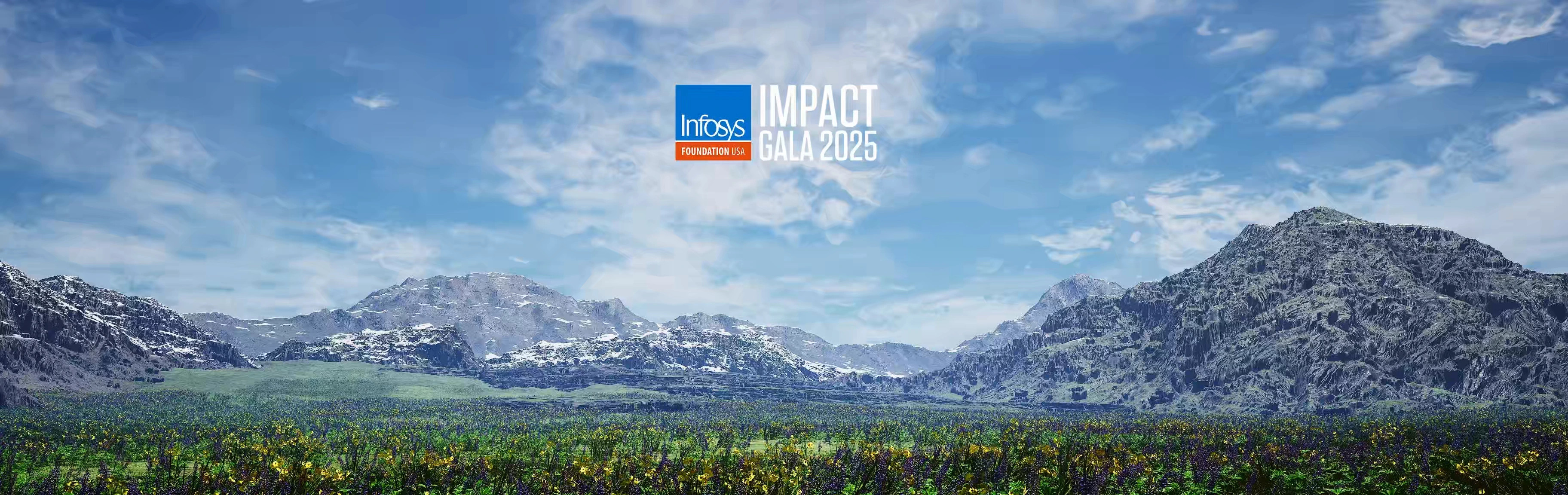
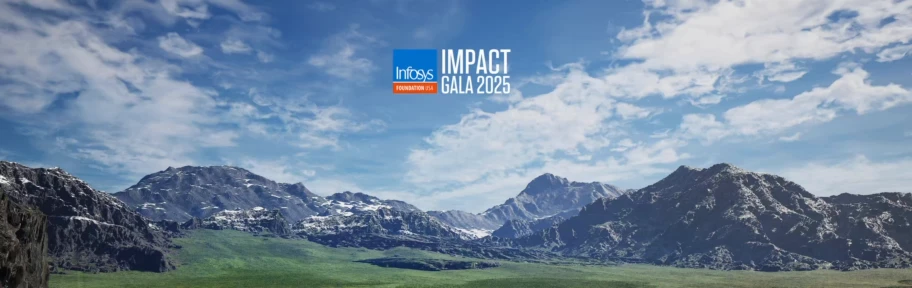
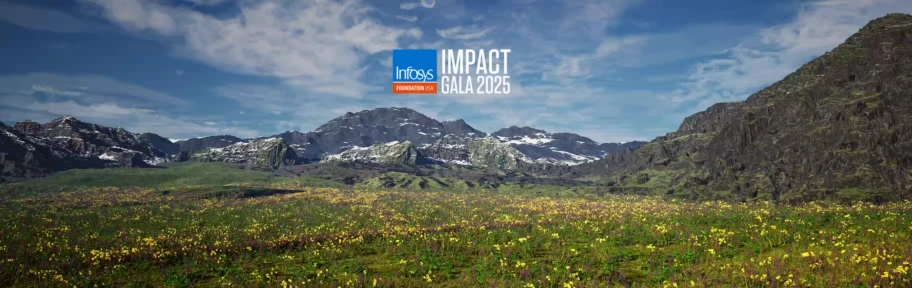
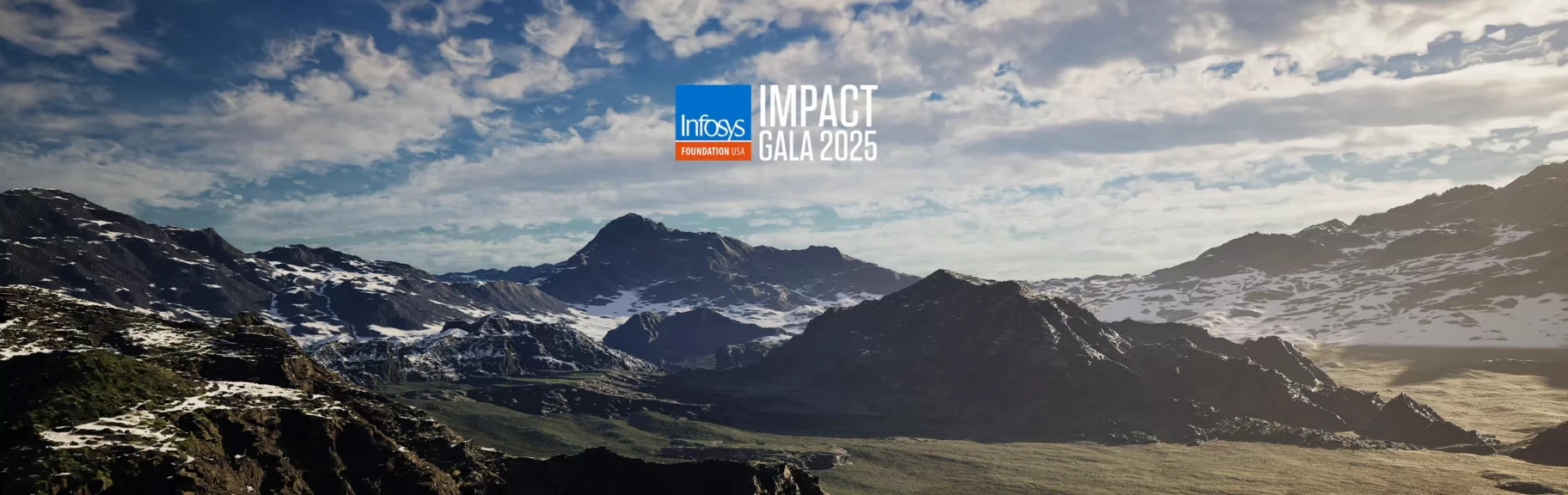
Daylight meadow from the surviving ultra-wide R3 stage export.
Project overview
For the 2025 Infosys Foundation USA Impact Gala in San Jose, I created the long-form visual environment that ran across the stage behind live speakers and panel discussions. The Foundation and Infosys CMT hosted the event to mark the Foundation’s tenth anniversary.
I built the environment in Unreal Engine and delivered it as an ultra-wide 3648×1152 video that runs for just over two hours. The landscape needed to develop gradually enough to sustain interest while leaving the focus on the speakers.
Designed Around the Speakers
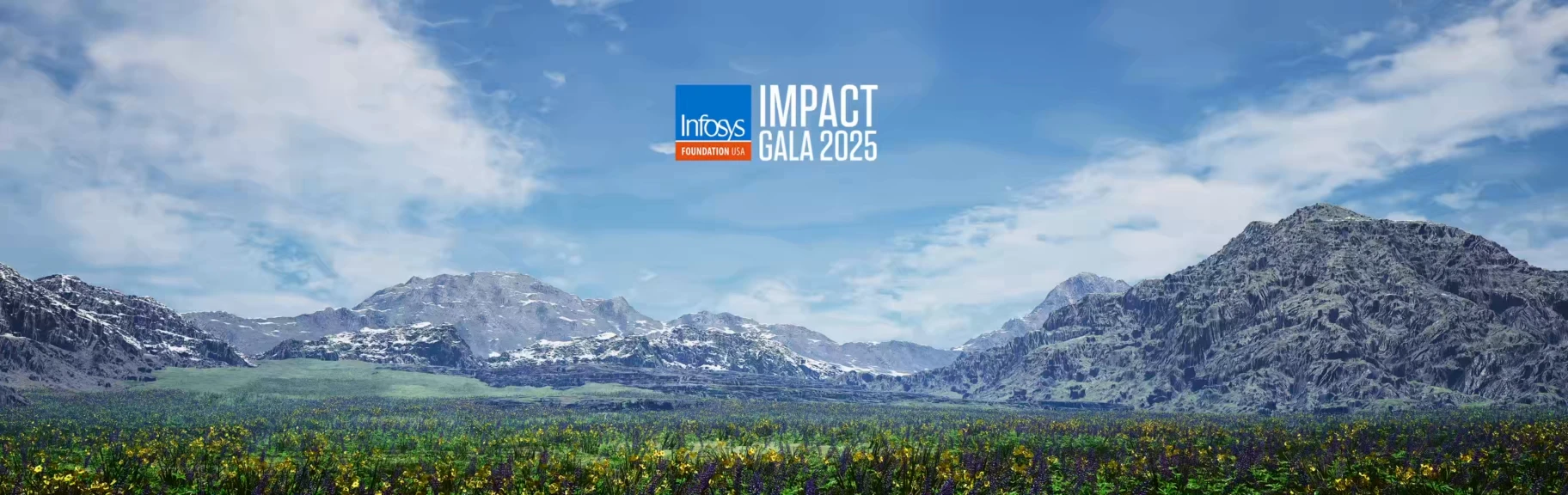
The seated panel occupies the center of the real composition. I kept the strongest landscape contours above and around the panel, with depth carried by the foreground meadow, valley and distant ridge. The gala lockup sits high in the sky, clear of the speakers.
From across the ballroom, the panorama reads as one environment. From closer to the stage, the slow camera and atmospheric changes preserve that depth while leaving the panel in focus.
The Environment
The same terrain carries the full sequence. Snow, exposed rock and the lower meadow shift in prominence as the viewpoint descends. The sky and light change the character of the landscape while the mountains give the audience a stable point of reference.
Motion Measured Across Two Hours
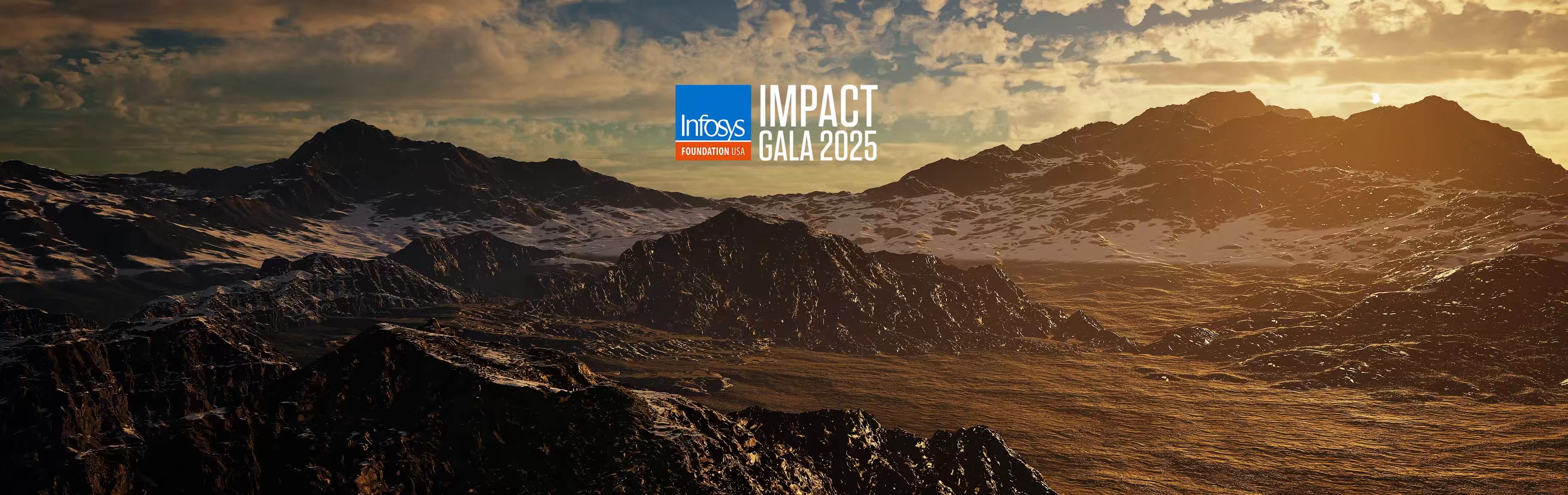
I distributed camera movement, light and environmental change over the length of the session. The opening moves slowly off the high panorama, the long daylight section holds the mountain skyline, and the closing view stays low as the meadow darkens.
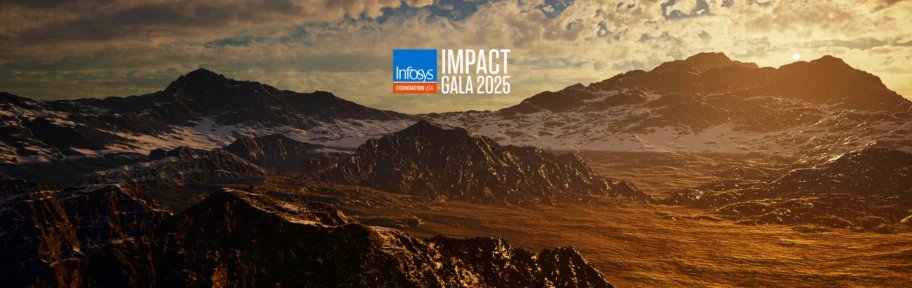
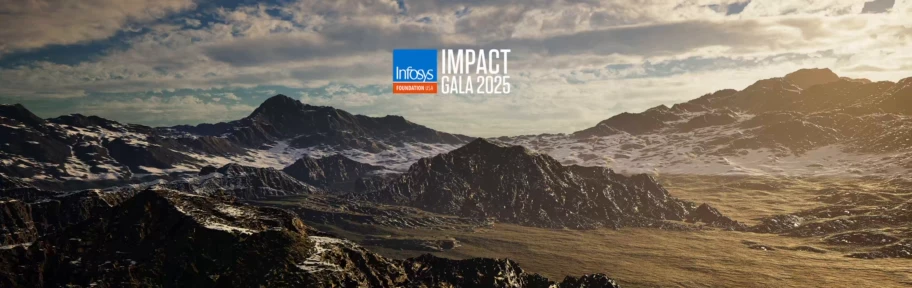
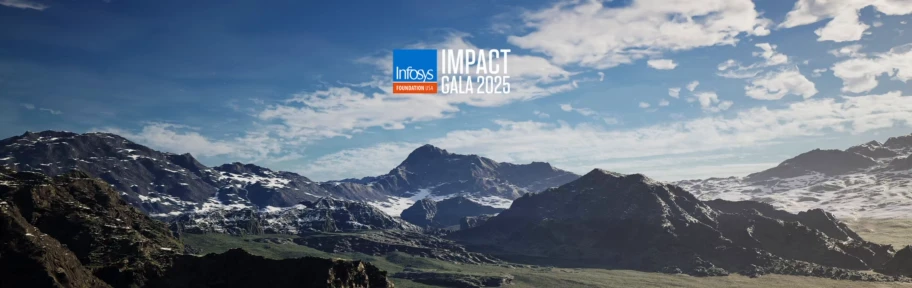
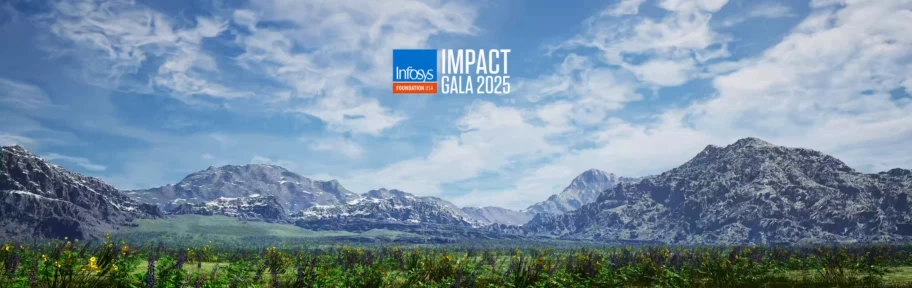
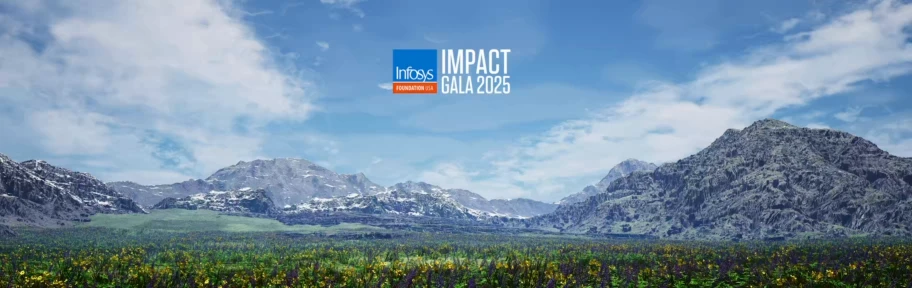
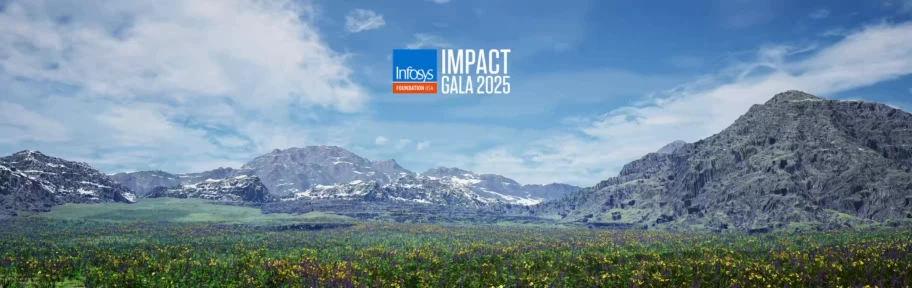
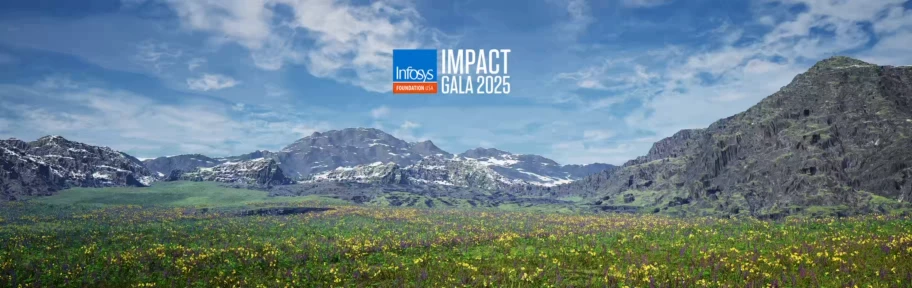
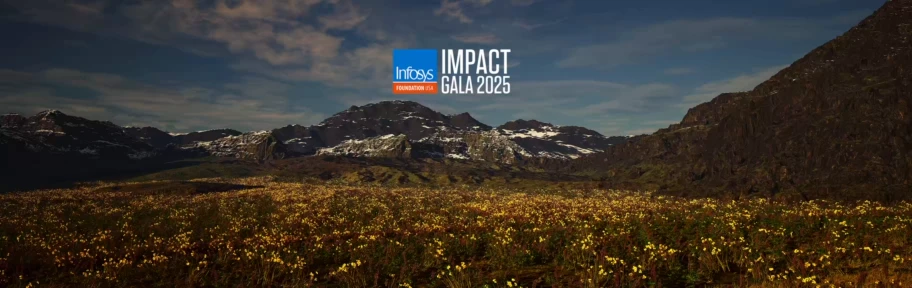
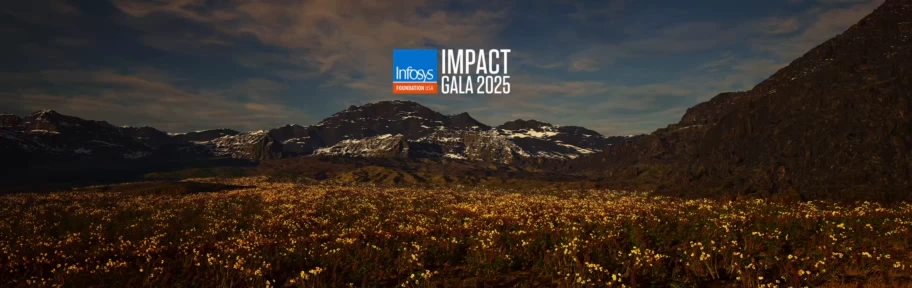
The progression below selects ten frames from the archive review’s 362 samples at 20-second intervals, plus a closing frame from the final second. The opening and closing show distinct compositions.
From Ridge to Meadow
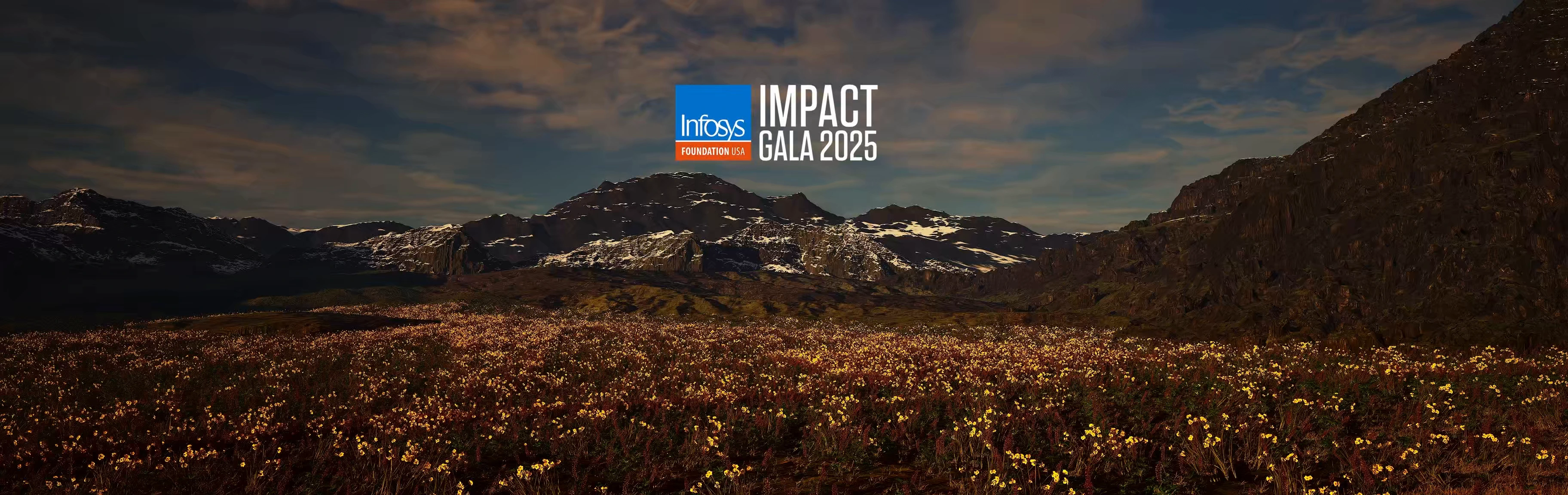
The opening camera looks down across the valley. By the midpoint, the ridges sit lower in the frame and flowers begin to fill the foreground. At the close, the camera holds a low position with the rocky slope extending in from the right.
Lighting as a Source of Change
Light provided a way to change the mood without introducing faster movement. Golden highlights give way to cooler light across the snow, then brighter meadow greens. Late in the sequence the sky and terrain darken while the flowers retain warmer highlights.
Unreal Engine Production
I assembled the terrain, grass, sky and lighting in Unreal Engine 5.5.1, then used the camera and the changing atmosphere to develop the environment over the session. The project archive includes bundled environment assets alongside local landscape work.
Three saved LevelSequence assets contain camera-cut, transform and easing markers. Movie Render Queue logs record single-camera-cut render jobs and the same 3648×1152 output resolution as the surviving export. The exact assembly of the encoded delivery is unverified.
- Landscape and environment assembly
- Camera and lighting development
- Sequencer tracks
- Movie Render Queue
- Ultra-wide stage export
Building the Environment
This 32-second edit from the supplied 1:12 timelapse condenses the high panorama, the approach to the meadow and the darker closing state. The accelerated render makes the camera travel and lighting progression easier to see.
The timelapse shows rendered output. The saved Sequencer assets and render logs document the editor-side workflow.
Accelerated environment study
3648 × 1152 Ultra-Wide Delivery
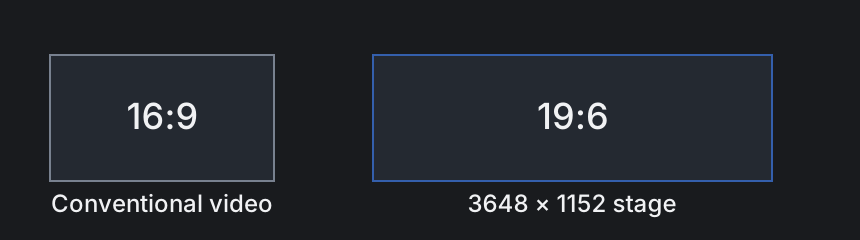
The stage output is 19:6. At equal height, its canvas is about 78% wider than 16:9. That width gives the mountain contours and valley room to extend around the panel while keeping the gala lockup high in the composition.
Final Stage Output
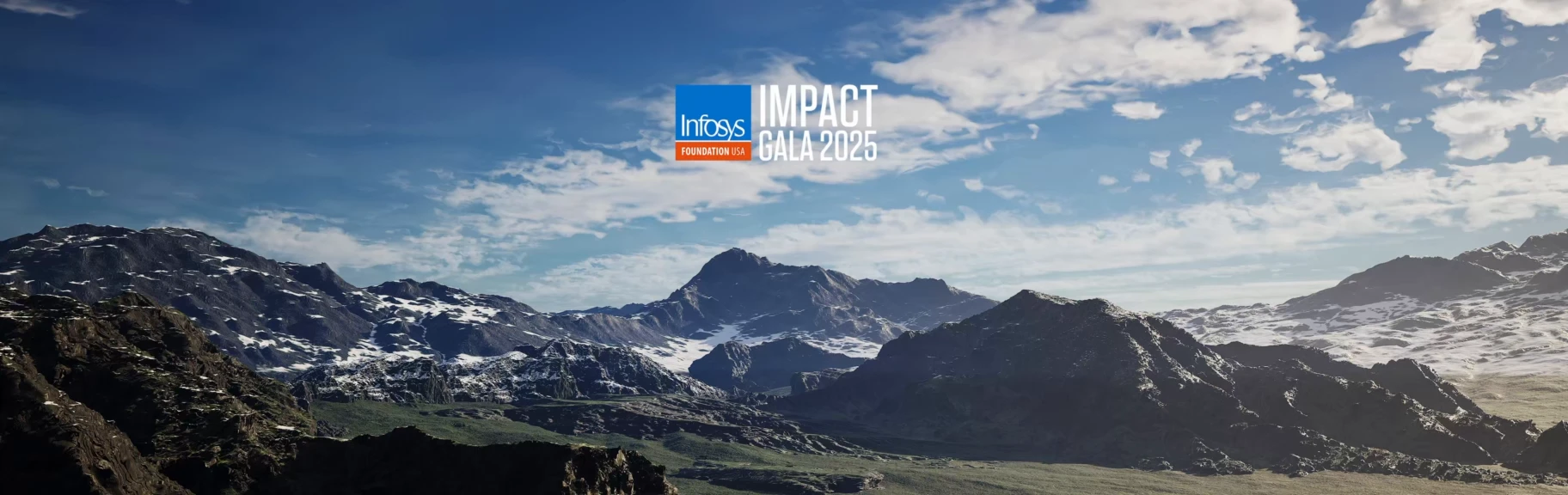
The surviving R3 delivery runs 02:00:34.867 at 3648×1152, 30 fps, encoded in HEVC. The 24-second review edit samples the warm panorama, daylight meadow and darker closing view. It preserves the stage aspect ratio.
Stage export · three points in the sequence
From Unreal to the Stage
In the wide venue photo, the early panorama spans the display behind the panel. The pointed peak, dark foreground ridge and warm right-hand light correspond to the rendered scene. The closer panel photo shows the later meadow state, with the snow-streaked massif and rising right-hand slope.
These are scene-level matches. Screen perspective, exposure and foreground occlusion prevent an exact frame match. Both photographs show how the composition reads around people in the actual ballroom.
What This Project Demonstrates
- Unreal Environment Production
- Assembling and shaping a landscape for final output.
- Long-Form Sequencing
- Distributing visual development across more than two hours.
- Stage Composition
- Framing an ultra-wide environment around speakers and event branding.
- Environmental Motion
- Using camera, light and atmosphere to change the scene gradually.
- Large-Format Delivery
- Preparing the 3648×1152 stage asset.
- Live-Event Production Awareness
- Designing around the display, stage and audience sightlines.